
Breakfast Calories to Gain Weight: The 20–30% Rule
How Many Calories for Breakfast to Gain Weight? (As muscle, not random fat)

You’re trying to gain, but mornings kill your momentum: low appetite, rushed, and you “make up for it later” (you don’t).
Here’s the simple answer: give breakfast a role.
A clear calorie target, so it reliably moves the scale.
Through the post, I’ll show you how many calories to aim for at breakfast to gain weight, plus how to hit it even if you’re not hungry.
KEY TAKEAWAYS
Breakfast = 20–30% of daily calories. (2,600 → 520–780 kcal; 3,000 → 600–900; 3,400 → 680–1,020.)
Protein = 30 to 45 g at breakfast (~0.3–0.5 g/kg).
Run a +300–500 kcal/day surplus above maintenance.
Use calorie-dense foods (milk, nut butter, oils, cheese, avocado, bagel) to hit targets without big volume.
Low appetite: go shake-first and eat at the same time daily. Hunger usually adapts in 10–14 days.
Weigh every morning: use the 7-day average. If it’s not up to 0.25–0.5 kg/week, add +100–200 kcal.
What does “breakfast calories to gain weight” actually mean?
Truth is, you could not eat breakfast and still gain weight.
Although trying to eat enough calories with only lunch and dinner is a good way to set yourself up for failure.
I couldn't stand the idea of food in the morning for a while, and always skipped...
...I also stayed at the same weight for a while.
If your daily intake beats your maintenance by a consistent surplus, you gain. That’s the actual goal.
Breakfast is the starting point of your daily caloric intake. Assigning breakfast a calorie target is how you stop “hoping” and start winning the day by 8 a.m.
(Yes, even if your morning hunger is trash, you can train it)
Why you need a clear breakfast target
If you’ve got vague plans, you’ll see a stalled scale.
Without a target, you under-eat early and rely on “I’ll eat more later” (spoiler: you won’t).
A set number makes food choices automatic and measurable.
Bottom line: A firm breakfast target is the simplest lever to turn “I can’t gain weight” into actual weekly weight gain.
Step-by-Step: How many calories are in a higher calorie breakfast for weight gain?
Quick framework (then we’ll personalize it):
Find your maintenance: Bodyweight (lb) × 14–16 or bodyweight (kg) × 30–35. This gives you an estimate of your individual calorie needs based on your body and activity level.
Add a surplus: +300 to +500 kcal/day (lean, steady gain). To gain weight, you need to consume more calories than your maintenance level.
Allocate to breakfast: 20–30% of your daily target. If you’ve got a low appetite, start at 10-15% and push up weekly.
Lock protein: 30–45 g at breakfast ( 0.3–0.5 g/kg).
Build with calorie-dense anchors so you hit the number without feeling stuffed.
Track weekly weight and adjust +100–200 kcal if the scale doesn’t move.
Example targets:
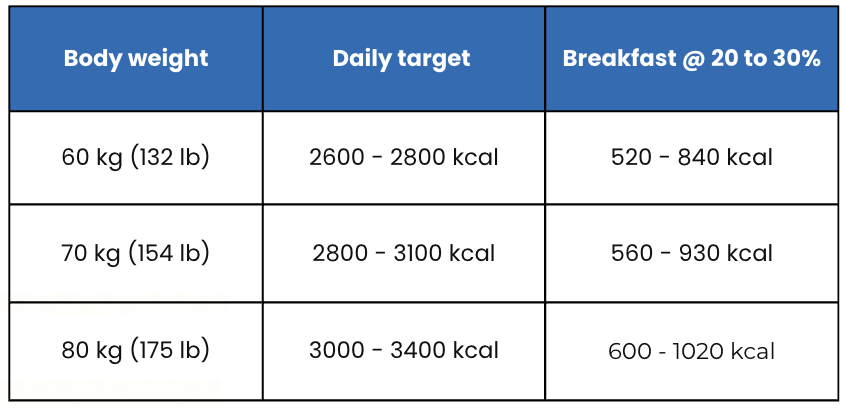
Aim for the upper end if mornings are your weak link.
Blend into the full tutorial below:
Step 1 → Set Your Number (No Guessing)
Use the table above or the formula.
Pick your daily number, then multiply by a number from 0.2 to 0.3 to get breakfast calories. Write it down.
Step 2 → Make Protein Non-Negotiable
Hit 30 to 45 g at breakfast.
Protein = muscle retention, recovery, and satiety that doesn’t wreck appetite later if you choose smart sources (eggs, greek yogurt, whey, deli meats, cottage cheese, or a convenient protein shake).
Step 3 → Choose Your Calorie Anchors
Pick 2–3 from this list and you’re halfway there:
Whole milk
Peanut butter
Olive oil
Avocado
Cheese
Honey/jam
Bagel / thick sourdough
Whole wheat toast
Whole grains
Greek yogurt
Chia seeds
Make good use of high calorie ingredients, like peanut butter, to help meet extra calorie needs.
Step 4 → Plate It
You can make any meal you’d like with the ingredients as long as you reach your calorie and macro goals, that’s the beauty of it.
I know it takes a fair bit of mental effort nevertheless, so I've fixed that for you:
Get a complete nutrition plan 100% tailored to your situation. No commitment.
It'll be paid when it comes out, but if you get on the list beforehand,
You'll get it completely FREE.
Or, take a look at 3 meal templates I’ve constantly used, and still crave:
A) High-Cal Breakfast Sandwich (~800–1000 kcal)
1 large bagel, toasted (or substitute with whole wheat toast for extra fiber)
3 eggs scrambled in olive oil
2 slices cheese + 2–3 slices deli turkey or bacon
½ avocado + hot sauce
Optional: drizzle of maple syrup for extra calories and flavor
Fruit on the side
B) Breakfast Burrito (~700–900 kcal)
Large tortilla
3 eggs + potatoes or rice + cheese
Sautéed peppers/onion (small amount if appetite is low)
Spoon of sour cream + salsa
Add 1 tbsp olive oil while cooking for +120 kcal
Optional: serve with a side of whole wheat toast
C) Banana Shake (~900–1100 kcal)
500 ml whole milk
1 scoop whey
1 large banana
50 g peanut butter
30 g honey
1 tbsp olive oil
Optional: 1–2 tbsp chia seeds for extra calories, fiber, and healthy fats7
Step 5 → If Appetite Is Low, Engineer It
Liquids first: Shakes are easy calories.
Warm, salty, tasty: Palatable foods are easier early.
Smaller bites, more density: Add oils/cheese/condiments instead of more volume.
Consistency trains hunger: Eat breakfast at the same time for 10–14 days, your hunger hormone will pulse earlier. Learn how to train your body in to craving breakfast each morning.
Adding Nutrition to Breakfast (Without Sacrificing Calories)
Packing more nutrition into your breakfast doesn’t mean you have to settle for bland.
In fact, the right choices can help you gain weight in a healthy way while supporting muscle growth and overall well-being.
The secret?
Focus on foods that deliver both calories and nutrients. Think chicken thigh instead of chicken breast.
There are 3 main factors you need to look out for:
A) Healthy fats:
Avocado on whole grain bread, a handful of nuts or seeds sprinkled over Greek yogurt, or a spoonful of peanut butter blended into a smoothie.
These options boost your calorie intake and provide essential fatty acids for optimal health.
B) Complex carbohydrates:
Sweet potatoes, brown rice, or whole grain bread.
These slow-digesting carbs help keep your energy steady all morning and support a balanced meal.
C) Lean protein:
Scrambled eggs, cottage cheese, or a scoop of whey protein powder in your shake.
This combo not only helps you gain weight but also supports muscle growth and recovery.
For a quick, nutrient-dense breakfast:
Try whole grain toast topped with smashed avocado, a side of scrambled eggs, and a glass of whole milk.
Or, mix cooked sweet potatoes with cottage cheese and a drizzle of olive oil for a savory, high-calorie start.
The key is to combine calorie-dense foods with nutrient-rich ingredients so you’re fuelling your body for healthy weight gain, not just eating more for the sake of it.
Incorporating Dried Fruit and Dark Chocolate for Easy Gains
This isn’t talked about much, but one of my favourite ways to get calories down when appetite is trashed:
If you’re looking for a simple way to make your breakfast more calorie dense (and a lot more enjoyable), dried fruit and dark chocolate are a cheat code.
These two ingredients are not only delicious but also pack a punch when it comes to boosting your calorie breakfast.
Dried fruit, like raisins, dates, or apricots are loaded with natural sugars and provides a quick energy boost, making it perfect for anyone focused on weight gain.
Paired healthy fats from peanut butters or seeds, and you’ve got a high calorie breakfast that’s both satisfying, easy to force down, and nutrient-rich.
Dark chocolate brings healthy fats and antioxidants to the table, and it pairs PERFECTLY with Greek yogurt.
The tastiest combo i’ve had was blending it with Greek yogurt, dried fruit, a chunk of dark chocolate, and a spoonful of peanut butter for a decadent, high calorie shake.
Or, simply sprinkle chopped dried fruit and dark chocolate chips over your yogurt or cooked oatmeal for a sweet, calorie-dense topping.
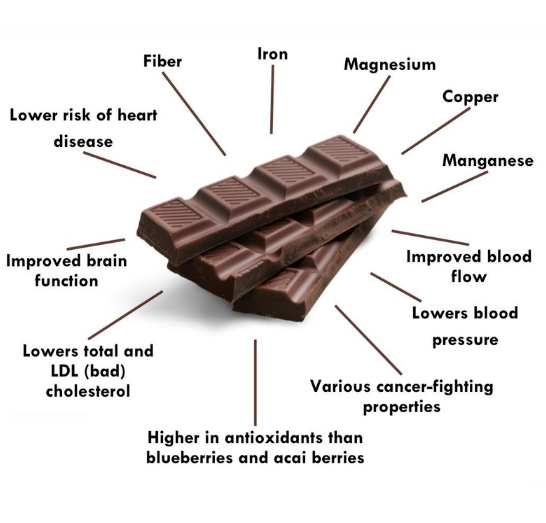
(Find out about all the health benefits dark chocolate has)
These small additions can make a big difference in your daily calorie intake, helping you reach your weight gain goals without feeling like you’re forcing down boring food.
Key Considerations for Nailing Breakfast Calories
Fiber timing: If mornings kill appetite, keep fiber modest at breakfast; load more veggies later.
Carb choice: Choose easy-to-digest complex carbs like potatoes, whole grains, and legumes for sustained energy and better nutrient intake. Whole grains are especially beneficial for supporting weight gain and muscle growth. Opting for complex carbs and whole grains helps avoid blood sugar spikes and supports steady energy throughout the morning. Easy options include bread, tortillas, ripe fruit, and rice.
Salt & sauces: Don’t be a hero, make food delicious so you actually finish it.
A well balanced breakfast that includes complex carbs, whole grains, protein, and healthy fats is important for overall health and effective weight gain.
Avoiding The Two Most Common Mistakes When Gaining Weight at Breakfast
MISTAKE 1:
When it comes to gaining weight, breakfast can make or break your progress. One of the biggest mistakes?
Skipping breakfast entirely, which often leads to playing calorie catch-up later in the day (Won’t work out in your favor, that’s a lesson experience taught me).
MISTAKE 2:
Another common pitfall is relying on high calorie foods that are low in nutrients, think sugary cereals or pastries.
While these might help you hit your calorie target, they don’t support a healthy weight or provide the nutrients your body needs for muscle growth and optimal health.
Wrapping Up & Personal Take
If you want the scale to move, stop freestyling breakfast.
Pick a number (20–30% of daily calories), lock 30 to 45 g protein, and anchor with calorie-dense foods.
A higher calorie breakfast is especially important if you want to gain muscle, as it supports building muscle by providing the energy and nutrients needed for muscle growth.
Use liquids if appetite is weak.
Track weekly, adjust in +100–200 kcal bumps, and keep going until your average climbs.
I work with hardgainers all the time, the ones who win don’t eat “perfect,” they eat predictably.
Breakfast is where that predictability starts, and a structured, nutrient-dense breakfast offers significant health benefits beyond just weight gain.
FAQ:
What macros should I aim for at breakfast?
Protein 30–45 g, carbs 60–120 g, fat 20–40 g. Slide carbs/fats based on appetite (more fats = more density, fewer bites). Include healthy fats, but moderate your intake of saturated fat to support overall health.
I’m never hungry in the morning, do I just force it?
Don’t force volume, blend calories (shakes) and make foods more palatable (warm, salted, sauced). Eat on schedule for two weeks, and hunger will adapt. For those who want to gain weight, calorie-dense smoothies and shakes can help increase intake without overwhelming your appetite.
Can I just do a huge shake?
Yes. It’s often the easiest win. Hit your calories and protein, then add a small solid bite (banana, toast) so you’re not fully liquid. Weight gainer shakes are especially useful for building muscle tissue and supporting weight gain when paired with lifting weights.
What if I gain too much fat?
Tighten surplus (e.g., drop -150 kcal/day), keep breakfast protein high, and bias carbs around training instead of random snacking. If your goal shifts to weight loss, you may need to eat fewer calories or consume fewer calories than you burn to lose weight. Losing weight and weight loss require a calorie deficit, so adjust your intake accordingly.
Educational content, not medical advice.